Step 1. Check the Inlet Air Line Size and Pressure
Installing too small of an air line is the most common mistake relating to an AODD pump. By using too small of an air
line, you are starving the pump of the fuel. It needs to operate at peak performance. Double
diaphragm pumps come in all shapes and sizes, based on the application and fluid requirements. Larger AODD pumps,
one inch and greater. Require more compressed air and larger air lines to operate at full capacity compared to smaller
pumps. You can find the appropriate air line size for your pump in the manufacturer’s installation and operation
manuals. As a general guideline for AODD inlet air line sizes. It is best practice to match the air line hose size to the air inlet port size on the air valve.
Inlet air pressure also plays a key role in getting the
most out of your pump. Diaphragm pumps operate
on a 1:1 ratio. Meaning the pressure of the inlet air
you feed the pump is directly related to the fluid
pressure at the outlet of the pump. For example, if
the target outlet pressure of a 1 inch, 50 gpm pump
is 100 psi. The inlet air pressure entering the air
valve of the pump must be greater than or equal to 100 psi.
System back pressure and fluid viscosity will impact
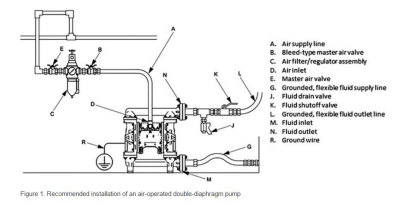
the outlet fluid pressure. Too little back pressure may cause the pump to run inefficiently because the ball checks may not check as quickly. Too much back pressure can cause the pump to stall, if the fluid pressure overcomes the air pressure to the pump. To control the performance (flow and pressure) of an AODD. It is important to have an air regulator assembly installed to control the incoming air pressure (see Figure 1, C). Installing the correct air line size with an air regulator will solve the most common installation problem found with AODD pumps.
Step 4. Ensure Proper Tubing and Piping Size
Pump inlet and outlet fluid port diameters vary based on the flow rate required. It is critical that inlet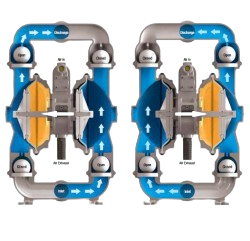 and outlet hose sizes match the size of the pump. Of primary concern is the risk of cavitation. And the negative effect it has on the pump, causing more frequent repairs and higher maintenance costs. For example, if a 1 inch pump has a ½ inch inlet hose connected. The pump will not be able to operate at full capacity without the risk of cavitation. This risk increases dramatically as the desired fluid viscosity rises. In this example, the 1 inch pump should have a 1 inch inlet and outlet hose attached to avoid cavitation. And more frequent, costly repairs. It is also recommended that an AODD pump be installed with a flexible inlet/outlet connection rather than being hard plumbed. As pump speed increases, vibration increases. As vibration increases, the risk of loosening a hard plumb connection increases, creating the potential for leaking.

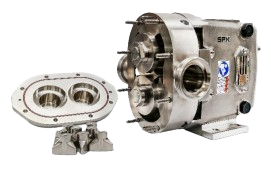 missing preventive maintenance steps. The pumps were able to perform, but damage was occurring causing inefficiencies and expense in the upkeep.
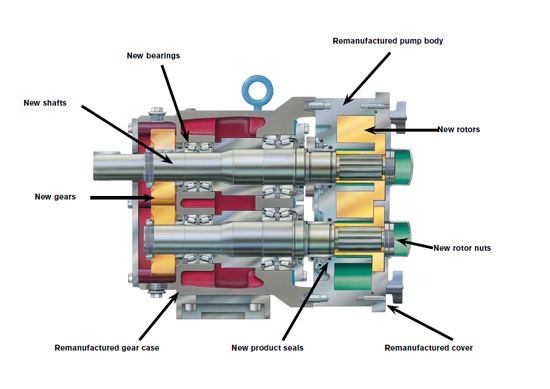 Therefore, when complete the pump is back to its original performance specifications and has a new 1-year warranty from SPX Flow. Due to the new oversized body, standard rotors are not used due to potential damage or failure of the pump. Also a pump can be remanufactured two times in its lifetime. Therefore cost of a remanufactured pump is approximately 75% of the cost of a new pump.
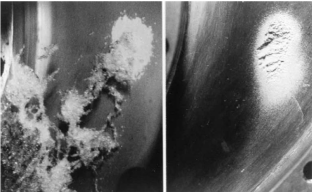 microscopic in size, but the cumulative effect of millions of pits over a period of time can destroy a pump impeller. Cavitation can also cause excessive pump vibration which damages bearings, wearing rings and seals.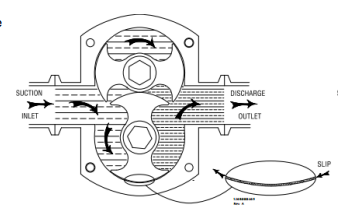
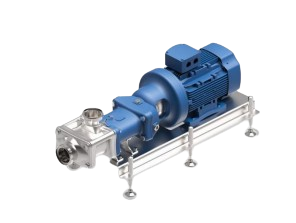 After one month, the customer loves the new process improvements. They are maintaining a more consistent flow rate of 80-110 gpm and lower pressures of 60 psi. Production increased by 26% with more consistent product and a quieter production area. Maintenance and downtime decreased by 30%.