
Extending the Life of your Thermometer
Quality sanitary thermometers are built to provide a long service life.
Here are a few tips to help you get the most out of your instrumentation.
Environmental Conditions: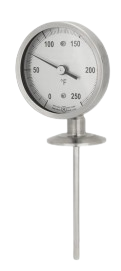
The ambient temperature could have a negative impact on the performance of your thermometer. Electronic thermometers tend to have a lower ambient operating range. Typically -40° to 160°F, than mechanical types like bimetal thermometers. Which can operate in an ambient temperature of up to 200°F. Most quality sanitary thermometers are hermetically sealed. And are suited for use in environments where humidity or moisture is high. If your thermometer is submerged. Or subjected to high pressure spray and not rated for those conditions, water damage will likely result.
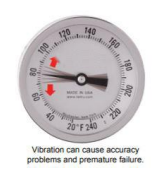 Vibration:
Vibration is a main cause of loss of accuracy and failure for sanitary thermometers. A
silicone filled case should be used in applications where high vibration is present. The fluid will assist in dampening the internals of the thermometer, improving readability, and helping prolong its life. Use of silicone fill should be avoided where strong oxidizing agents such as chlorine, nitric acid and/or hydrogen peroxide are present.
Out of Range:
The measuring range should be selected so that the system temperature falls at approx. the mid-point of the scale. Care should be exercised for mechanical thermometers (bimetal, gas and vapor tension) to ensure that they are not exposed
to temperatures higher or lower than the measuring range. Thus preventing damage to the bimetal element and other components. Bimetal thermometers should not be exposed continuously to process temperatures over 800°F to avoid damaging the bimetal element.
Process Fluid:
The type of process fluid may have a damaging effect on the thermometer wetted parts. The use of a thermowell for applications with corrosive or caustic fluids, or those contained under pressure, will protect the stem of the thermometer. And also allow it to be removed from the process without shutting down the system.
Impact: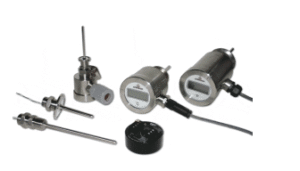
For applications that are prone to possible impact, lens material such as acrylic, polycarbonate or shatterproof glass will highly reduce the risk of damage.