
An Overview of Sanitary Check Valves
A check valve – also called a one-way valve or non-return valve – allows for fluids to flow in one direction only, hence the “check”. The valves have two ports – one for entry and another for exit. Check valves are used in a wide range of
applications, both sanitary and industrial, including condensate lines, pump discharge lines, steam lines and more. The purpose of a check valve is simple – they prevent back flow in your process. As a manual valve, they work automatically and are typically not controlled by any external control. In sanitary processing, check valves are typically 316L stainless and are CIP’able when installed properly. In other applications, check valves may be made of plastic or some other composite material. The two basic types of sanitary check valves are the disk type and the ball type.
Ball Check Valves
Ball check valves have a Y body configuration. The closing portion of the valve is a ball, either spring-loaded or gravity operated. During product flow, the ball is pushed up into the Y branch of the valve out of the product stream; allowing full flow through the valve. The combination of gravity and back pressure pushes the ball back against the valve seat in the main run of the valve when flow is stopped. Ball valves can be installed vertically or horizontally. In a vertical installation, product must flow from bottom to top in order for
gravity to seat the ball. In a horizontal installation, the curved portion of the valve should be upright and perpendicular to the pipe to ensure that it is free-draining and that the ball seats properly.
When selecting a ball check valve, make sure to pick the correct elastomer ball for your application. Balls are normally available in Buna, Viton®, and EPDM. Choose the material that is compatible with your product.
Disk Check Valves
Disk check valves have a straight through body with a valve seat machined into the valve. An insert holds a metal disc that is normally spring loaded to push against the valve seat. During product flow, the disk is pushed away from the seat. When the flow stops, a spring returns the disk and holds it closed against the seat. Back flow pressure also pushes the disk into the closed position. These valves are available with either a straight metal seat or a metal seat with an O-ring seal. The O ring seal option is used to ensure proper sealing as metal seats alone do not always create a perfect seal. They can be used in either horizontal or vertical applications, however if free-draining is required, the horizontal mount is recommended.
Disk check valves typically cost less than other standard valves and are smaller and lighter. However, they are not recommended for applications where there is heavy, pulsating flow.
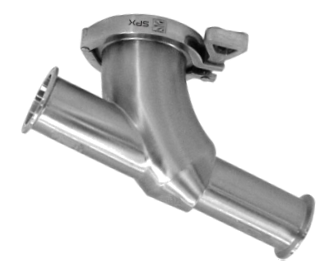
Thick, sticky products can also be problematic with ball check valves. In these cases, the ball can sometime stick in the Y branch and not properly reseat itself when flow stops. You can PIG your line through a ball check valve. Ball check valves have virtually no pressure drop. Some ball valves have an optional air blow check. This feature is used to isolate upstream equipment so that lines can be evacuated of product or CIP solution using air. These valves may also be used when passivating process lines.
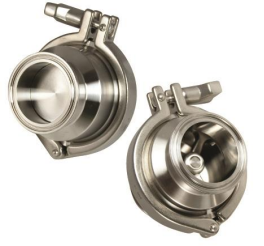
Disk check valves are available with a wide range of springs to provide greater precision on the pressure needed to “crack” or open the valve during operation. Disk check valves will have a higher pressure drop since the disk is in the flow path.