Skip to content

The Case of The Locking Rotors 

When the Pumps Went Silent, the Pressure Told the Truth 

Detective Newell hated getting calls before coffee. This one came from one of the outside saleswomen.  “Newell,” she said, voice tight. “My customers got a problem. Ten U2-006 PD pumps that are all locked up.”
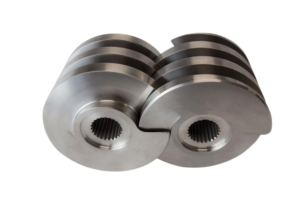
Locked up pumps were never just locked up pumps. They were always a symptom—never the disease.  Newell grabbed his jacket and motioned to Inspector Gauge. “Let’s go see what the pumps are trying to tell us.”


They found the pumps mounted on their sides, perched above a piece of equipment installed by another contractor. Newell didn’t like that already. Pumps, like people, don’t appreciate being put in awkward positions.

They cracked them open one by one. Same story every time.

“Notice this?” Inspector Gauge said, pointing.

Newell nodded. “One side locks up first. Always the same side.”

Back at the shop, they tore down four of the suspects. The evidence didn’t lie: rotors had kissed the cover—hard—and seized.    “Running dry,” Newell muttered. “Starved.”

They told the customer as much, but the customer pushed back. “No way. That’s not it. Let’s try hot clearance rotors.”

Newell didn’t argue. He’d learned long ago that sometimes people need to walk into the truth on their own.

Before the fixes even started, the phone rang again.

More pumps.

Locked up.
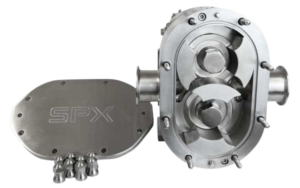
Same equipment.

All twenty U2-006 PD pumps were now suspects—and victims.  Newell and Gauge went back to the plant. Déjà vu. Same damage. Same story.

“You’re running them dry,” Newell said again, slower this time.  The customer still wasn’t convinced.  So Newell made his move. “Then let us watch them run.”

They met with an engineer and walked the process line end to end. Newell asked questions. He listened. He watched. He always watched…

“How much pressure are you seeing?” he asked.

“About 8 PSI,” the engineer replied.  Newell stopped walking.  “8?” He looked at Gauge. Gauge didn’t have to say anything.  “That’s not just low,” Newell said. “That’s a confession.”

He told them to install temporary pressure gauges. No theories. No opinions. Just facts.

They ran the system again.  Three minutes in, Newell spotted it – the centrifugal pump feeding the PD pumps wasn’t running.

“There it is,” he said quietly. “That’s the culprit.”

Newell laid it out clean and simple.  “The centrifugal pump must always run first. Always.”   PD pumps can’t be started without feed pressure.  If a PD pump runs dry, the rotors expand, touch the cover and lock up.   An improper start sequence and low PSI in the feed lines will always lead to problems.

They changed the sequence.  Ran the test again.  The pumps didn’t lock – didn’t squeal – didn’t complain.  They just ran.

Another mystery solved.  Another reminder that the correct start-up sequence is never optional.  Another case where the culprit wasn’t a broken part— but bad timing, low pressure, and the truth hiding in plain sight.

If you want more information, contact us by phone or email.