UL-508A Certification

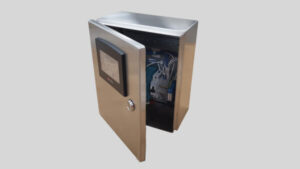
M.G. Newell is happy to announce that we are now a UL-508A certified panel shop!

Congratulations to our entire staff of Controls and Automation engineers and technicians on this milestone achievement!

What is UL-508A Certification?

A UL-508A Panel is an electrical control panel with a UL-508A Label that certifies it meets the safety standard and also UL Listed Panel Shop produces it.  The construction of the entire unit has consists of several tests. Which includes its ability to safely function within the specified voltage, current and circuit ratings.

This certification applies to industrial control panels operating from a voltage of 600 volts or less. Which is in accordance with NEC, ANSI/NFPA 70.

How does UL-508A ease approvals?

When you think about the simplest, lowest cost way to provide an equipment package with third party approval. The answer is providing a UL-508A panel as part of the equipment package.

When packaged equipment is pre-approved by a third party, it’s easier for another third party to approve it. This is a big deal when an Inspector must approve a new equipment installation before anyone can use it.

Inspectors will generally approve your newly installed equipment package with a UL-508A label on your control panel because it certifies your adherence to a generally accepted safety standard.

Kest Technology – ISO Certified

Kest Technology - ISO Certified

We are happy to announce that our partner Kest Technology recently received certification for ISO 9001:2015 and ISO 14001:2015.  CEO Goran Kristiansson states, “This was an important step for Kest to secure and improve the quality and environmental work along with the future growth of the company.”


Kest Technology offers a line of components for critical pharmaceutical processing.  Products include:

  • Kest Mixer – range of mag-driven mixers for processes from 200L up to 20,000L
  • Kest Lock – a patented quick connection for tri-clamp couplings that requires no tools
  • Kest Sampling – a self-sealing silicone diaphragm sampling port
  • Custom and retrofit options – Mixers, mixing heads and tanks ends are customizable.

For full information, check out the Kest website.

How We Make It Work Better – A Casy Study

Eliminate mixing issues with a fastfeed

A juice manufacturer dumped powders into the top of blend tanks which are on a mezzanine about 15’ high. Their process re-circulated pectin through an old-fashioned Tri-blender and tank arrangement. They said, “We don’t have a mixing issue.” Sound familiar?  However, they were interested in a process to get pectin into solution more efficiently.

Admix’s FastFeed™ to the rescue. With a rental unit setup completed, we spent the day testing the unit. The powders were a no-brainer. What once took hours was completed in minutes. With the demo breezing right along, we noticed that they were pumping concentrates with a very large and inefficient diaphragm pump. After some discussion, we decided to add a tee and wand on the suction side of the FastFeed™ to test how the FastFeed™ would handle the concentrate. The result – we were able to pump the concentrate at a flow rate that was very close to their diaphragm pump and certainly at an acceptable rate. Now they are handling pectin powder and concentrate.  That’s two birds with one stone!  That’s making it work better!

Some key points to consider for your mixing applications:

  • Eliminate the risk of injuries by handling powders on the floor.
  • Eliminate particulates in bottom of tanks due to poor mixing.
  • Get consistent batches with a single pass.
  • FastFeed™ makes any size batch – not limited to batch tank size
  • Eliminate Tri-Blender (and sifting powder), diaphragm pump (dirty air) and large Breddo motors (bottom seals, power savings).  These save energy, maintenance, and down time.
  • CIP FastFeed™ on same circuit as tank, lines, etc.
  • Reduce your footprint with no need for additional slurry transfer pump.
  • Eliminate the requirement for hot water to dissolve powders which definitely saves energy.
  • Eliminate wasted time adding water to a blend tank without inducting ingredients into the tank at the same time. It reduced batch times significantly.

Contact us today to let us help you solve your mixing issues!

For more information, visit our website:  www.mgnewell.com and www.newellautomation.com.

Operation of the Steam/Water Venturi Mixer

Steam enters the valves through the lower steam inlets and passes through venturi inlets into the mixing chamber.
Cold water enters the valve through the upper water inlets and passes through into the mixing chamber.
As the steam passes through the venturi inlets, it diffuses and the velocity increases.  This helps reduce scaling and noise as well as enhancing the mix.
A thermostatic shutoff valve interrupts flow which then makes the specific shutoff temperature exceed.

Plate Heat Exchangers

Enhanced Heat Transfer Efficiency:

Plate Heat Exchangers utilize corrugated plates with large surface areas to facilitate efficient heat transfer between two fluid streams. The turbulent flow created by the plates ensures optimal heat exchange, allowing for precise temperature control. This results in faster heating and cooling times, reducing processing cycles and increasing production throughput. Improved efficiency also translates to energy savings, making PHEs a cost-effective solution for food and beverage processors.

Compact Design and Space Optimization:

Compared to traditional heat exchangers, Plate Heat Exchangers have a compact footprint. Their efficient use of space allows for greater flexibility in plant layout and optimal utilization of available floor space. This is particularly beneficial for food and beverage manufacturers operating in space-constrained environments. The compact design also simplifies installation and maintenance, reducing downtime and improving overall operational efficiency.

Flexible and Versatile Applications:

Plate Heat Exchangers are highly versatile and can be used for various applications in the food and beverage industry. From pasteurization and sterilization to cooling and heating processes, PHEs excel in delivering precise temperature control across a wide range of food and beverage products. They can handle different viscosities and can be easily adapted to suit specific process requirements, ensuring consistency and quality throughout production.

Hygienic and Sanitary Design:

Maintaining the highest standards of hygiene is paramount in the food and beverage industry. Plate Heat Exchangers are designed with sanitary requirements in mind, featuring smooth plate surfaces that are easy to clean and sterilize. By disassembling,  plate design allows for thorough cleaning, reducing the risk of contamination and ensuring food safety compliance. This design feature also facilitates regular maintenance and inspection, contributing to overall plant hygiene and product integrity.

Reduced Cross-Contamination Risk:

In food and beverage processing, preventing cross-contamination is essential to ensure product quality and safety. Plate Heat Exchangers are designed to minimize the risk of cross-contamination by providing efficient separation between the two fluid streams. The use of gaskets and proper sealing ensures there is no mixing or transfer of unwanted substances, protecting the integrity of the product and maintaining strict quality control standards.

With their compact design, precise temperature control, and hygienic features, PHEs contribute to improved productivity, reduced energy consumption, and consistent product quality. By adopting Plate Heat Exchangers in food and beverage processing, manufacturers can optimize their operations, meet stringent sanitary standards, and deliver high-quality products to consumers.

The Perfect Temperature, Every Time

Are you looking for an efficient and cost-effective method for heating water?  Whether a central hot water system, a hose station, a tank or a CIP system, the right heat exchanger can provide on-demand hot water at a precise temperature with no energy loss and within a small footprint.

Hydro-Thermal’s EZ heater systems use Direct Steam Injection (DSI) heat

 exchangers for perfect water temperature control.  DSI heat exchangers are essentially 100% efficient, delivering up to 25% energy savings and achieving a rapid ROI.  They are easy to install and are simple to operate. Hydro-Thermal heaters have a strong reputation for best-in-class reliability and minimal unplanned maintenance.  The EZ Heater can maintain +/- 1F precision, enabling consistent process temperatures and production capabilities. This gives you efficient and cost effective heat control from your heat exchanger and the perfect water temperature.

How Does It Work?  

Internal Modulation
This unique patented design assures precise steam control and produces predictable results based on the position of the stem plug. A variable-area steam nozzle meters steam flow at the point where steam and liquid first contact and mix. This technique eliminates the need for an external steam control valve and provide efficient heating control to your process.

Choked Flow

Choked flow is the phenomenon of accelerating a vapor to maximum velocity by creating a pressure differential through an engineered nozzle. Establishing choked flow precisely controls the heating of the liquid by metering the steam flow. Because of this metered flow, your steam is used efficiently; providing effective heat control to your water.

SPECIFICATIONS

» Pressure and Temperature Rating: 195 psig @ 400°F
» Material: Cast 316 stainless steel [A351-CF8M] » Internal Wetted Parts: 316/316L Stainless Steel
» Connections: H310, H320: NPT; H330, H340, H360: Flanged, ANSI Class 150#
» Compliances: Designed to ASME Sec. VIII, Div.1, CE/PED and CRN available upon request

An Overview of Sanitary Fittings

A lot goes into creating and maintaining a sanitary process, regardless of whether you are in food, beverage or pharmaceutical manufacturing.  The requirements to meet 3A, FDA and other sanitary guidelines are especially demanding.  Everything that the product touches, from pumps to tanks to piping, it is engineered to eliminate crevices that can create and harbor bacteria. Let’s tip our hat to the sanitary fitting, that is definetely one of the most useful pieces of equipment in your plant.

Sanitary Fittings 

A sanitary fitting connects different sections of your process – piping to pumps to heat exchangers and lastly to tanks.  A sanitary fitting is 2 ferrules, a gasket and a tri-clamp to hold them together. 

 A groove on the face of the ferrule provides a seat for the gasket.  The clamp provides the mechanical force to compress the gasket between the 2 ferrules.  Our hand tightens the clamp and we use torque tools to ensure a constant amount of force and eliminate over-tightening. 

 In sanitary processing, these fittings are more popular because they are easy to assemble, extremely easy to clean, leak-free and, when assembled correctly, have no small nooks or crannies to harbor bacteria.

The clamped union is the critical element for evaluating pipe pressure capacity.  Be certain your pressure ratings are for the union – not just the clamp.

Clamp Fittings 

Clamp style fittings are most popular because they offer easy assembly and breakdown of process lines and equipment.  They are available in 304 and 316L stainless steel in sizes ½” through 12”.

Weld Fittings 

Weld fittings is what we use are on permanent installations where process piping and equipment can be cleaned in place (CIP) and removal of the system components is not required.  We offer weld fittings in nominal tube sizes from ½” through 8” in both 304 and 316L stainless steel. Uniform wall thickness for ½” through 3” sizes measures 0.065.  In 4” size, wall thickness measures 0.083.  In both 6” and 8” sizes, wall thickness measures 0.109. It meets all 3A requirements. 

Bevel Seat Fittings 

We use bevel seat fittings on process equipment and piping to ensure rigidity of the system which is extremely important. Bevel seat unions consist of a threaded bevel ferrule mated with a plain bevel ferrule. We offer both in 304 or 316L stainless steel.  Bevel seat fittings meet all 3A requirements and are available in 1” through 4” sizes.

Gasket Selections

An again, 2 ferrules, a gasket and a clamp make up the tri-clamp fittings. Gasket selection is key to ensuring a leakproof connection.  The most common gasket materials are:

  • BUNA – nitrile rubber (NBR); a copolymer of butadiene and acrylonitrile
  • EPDM – ethylene propylene diene rubber
  • FPM – flourinated propylene monomer, commonly sold under the trade name Viton®
  • PTFE – polytetrafluoroethylene elastomer, commonly sold under the trade name Teflon®

For additional information on gaskets, check out our Elastomer Compability Guide and our Basic Elastomer Characteristics Guide.

Before tightening the clamp, make sure the gasket is seated properly into the seats of both ferrules.  Misalignment of the gasket is one of the main causes of leaks in tri-clamp fittings.

Check out our White Paper – An Overview of Sanitary Fittings – for more information or visit one of the links below.

For more information, visit our website:  www.mgnewell.com and www.newellautomation.com.

Solving Separation Anxiety with Systems Controls

One would expect a systems control integrator to understand equipment controls.  But what happens when your controls integrator also understands the process?

You get an improved production process, reduced maintenance, and more productivity!

Separator with Systems Controls 

A beverage producer in SC uses a separator as part of a hot tea fill process.  The original separator program forced the bowl to spin down when flow was not detected after several minutes.  The customer deemed that the time to spin down and then speed back up to processing speed was too long. He was losing too much production time.

The original integrator who installed the hot fill line changed the separator controls which allowed the separator to spin. Even when tea was not flowing, the separator would spin.  Because of the continuous spin of the bowl it created excessive heat, leading to a breakdown of the bowl gaskets. The gasket wear created a flow path around the seals to the solids discharge port on the separator.     

The customer then contacted M.G. Newell for help.  Our Newell Automation engineer installed a flow switch and timer on the outlet of the pump feeding the separator and then added a water circuit that allowed water to flow through the separator and to the drain.  He also programmed the system to allow automated butterfly valves to open when tea flow was not detected for the timer set point.  The water would flow to the separator inlet, through the separator and then dump to drain until the flow requirement was met.

After three months, the life of the bowl gaskets has increased 4-fold. The plant no longer has unplanned downtime due to gasket failure.  This has resulted in increased productivity and reduced maintenance costs.

Our Newell Automation team has a goal to understand the purpose behind the process.  They work with our process engineers to troubleshoot and streamline the process.  Contact one of our associates today to see how We Make It Work Better.           

Gama Jet

Optimized tank cleaning is an opportunity for significant savings, although often overlooked.  

By optimizing your tank cleaning, you can:

  • Decrease cleaning times by 70%
  • Reduce water and chemical usage by 70-80%
  • Reduce or eliminate confined space entry by 100%
  • Achieve cleaning effectiveness of 100%

Remember, its not just safer and cleaner tanks you are offering – you are giving them more time, and time is money!

Justify their purchase

Static Spray Ball

Easy to cleaning application, such as :

–Water tanks
–CIP tanks

Operating pressure :

30-43 PSI (2-3 bar)

Tank sizes : 
50-2.500 gallons

Rotary Spray Head

Easy-difficult to cleaning application, such as :

–Syrup tanks
–Milk tanks

Operating pressure :

30-43 PSI (2-3 bar)

Tank sizes :

50-10.000 gallons

Rotary Jet Head

Difficult to very difficult to cleaning application, such as :

–Syrup tanks
–Tanks with complicated structure

Operating pressure :

72-116 PSI (5-8 bar)

Tank sizes :
5.000-40.000+ gallons

Static Spray Ball

Consumption of water/chemical: 
High water / chemical consumption used, due to low cleaning efficiency
 
Cleaning efficiency:
Low cleaning efficiency, cleans in spot only and cascading water
 
Cleaning time: 
Long cleaning time = less production time

Rotary Spray Head

Consumption of water/chemical: 
Medium consumption
−30-40% less compared to a traditional spray ball
Cleaning efficiency: Medium cleaning efficiency
−10 times more wall shear stress compared to spray ball
Cleaning time: Medium
−Up to 30% reduced cleaning time compared to spray ball

Rotary Jet Head

Consumption of water/chemical: 
Low consumption
−70% less compared to a traditional spray ball
−20-30% less compared to a rotary spray head 
Cleaning efficiency :
− High cleaning efficient, high impact tank cleaning.
− 100 times more wall shear
 stress compared to traditional spray ball
Cleaning time : Fast cleaning = more production time
−50-70% faster cleaning compared to traditional spray ball

Carlton Scale

Attached pipes are the crucial difference between tank scales and other industrial scales such as platforms. As a tank scale is loaded, it deflects downwards pulling with it the attached pipes which apply an increasing upward force. This reduces the amount of weight registered by the load cells effectively reducing the sensitivity of the scale. Metrology can be seriously impacted if the scale is not designed and calibrated correctly.

Ideally, calibration is done by applying test weights which exercise the scale support-structure and piping, thus simulating normal scale operation exactly.

This exposes the piping effect on scale sensitivity allowing it to be accounted for in the calibration process, something that cannot be achieved with any form of electrical or theoretical calibration. However, test-weight calibration can be difficult and time-consuming. Additionally, test weights are expensive and may not be available, especially for higher-capacity scales.

One to four RapidCal modules can be used, depending on the scale arrangement. They attach between anchor points on the scale and on the foundation directly below, using special hardware and threaded rod to adjust length. A hand-operated pump causes the hydraulic cylinders to retract, thus applying the downward force to the tank via the reference load cells. These load cells are connected to a separate terminal which monitors the process and provides the total load applied for calibration and/or adjustment.

The RapidCal method uses tension hydraulic cylinders to create the downward force that is measured by reference load cells. The equipment is modular; one to four calibration modules can be used depending on tank design and capacity. 

There are three main steps during design and installation: 

1. Select the number and capacity of the RapidCal modules to be used. 

2. Select the type and placement of T-anchor points on the tank.  

3. Select the type and placement of B-anchor points on the floor/base.

General Considerations 

  • Forces on anchor points.
  • Lugs used also for lifting.
  • Do not interfere with the scale’s weigh modules.
  • Symmetrical placement of anchor points.
  • Vertical alignment of anchor points.
  • Calibration of tanks on a deflecting structure.

Why a Service Program Matters 

  • Reducing Downtime.
  • Regulating Maintenance Budgets. 
  • Extending the Lifetime of Your Weighing Equipment.

Is it Necessary to Partner with My Equipment Manufacturer? 

• Expert service engineers trained and equipped by the manufacturer.
• Factory-designed service procedures.
• Spare parts that meet manufacturer specifications and third-party approvals.
• Fast turnaround times due to easy access to parts and support.

How Do I Benefit from Setup and Configuration Services? 

• Setup of weighing parameters to meet process and compliance requirements.
• Interfacing to data acquisition and automation systems.
• Tailoring of workflows to maximize operator productivity.
• Configuring of input and output behavior.
• Documentation of installation activities and initial performance.